Advance and Deposit in the Philippines: Move-In Costs Explained
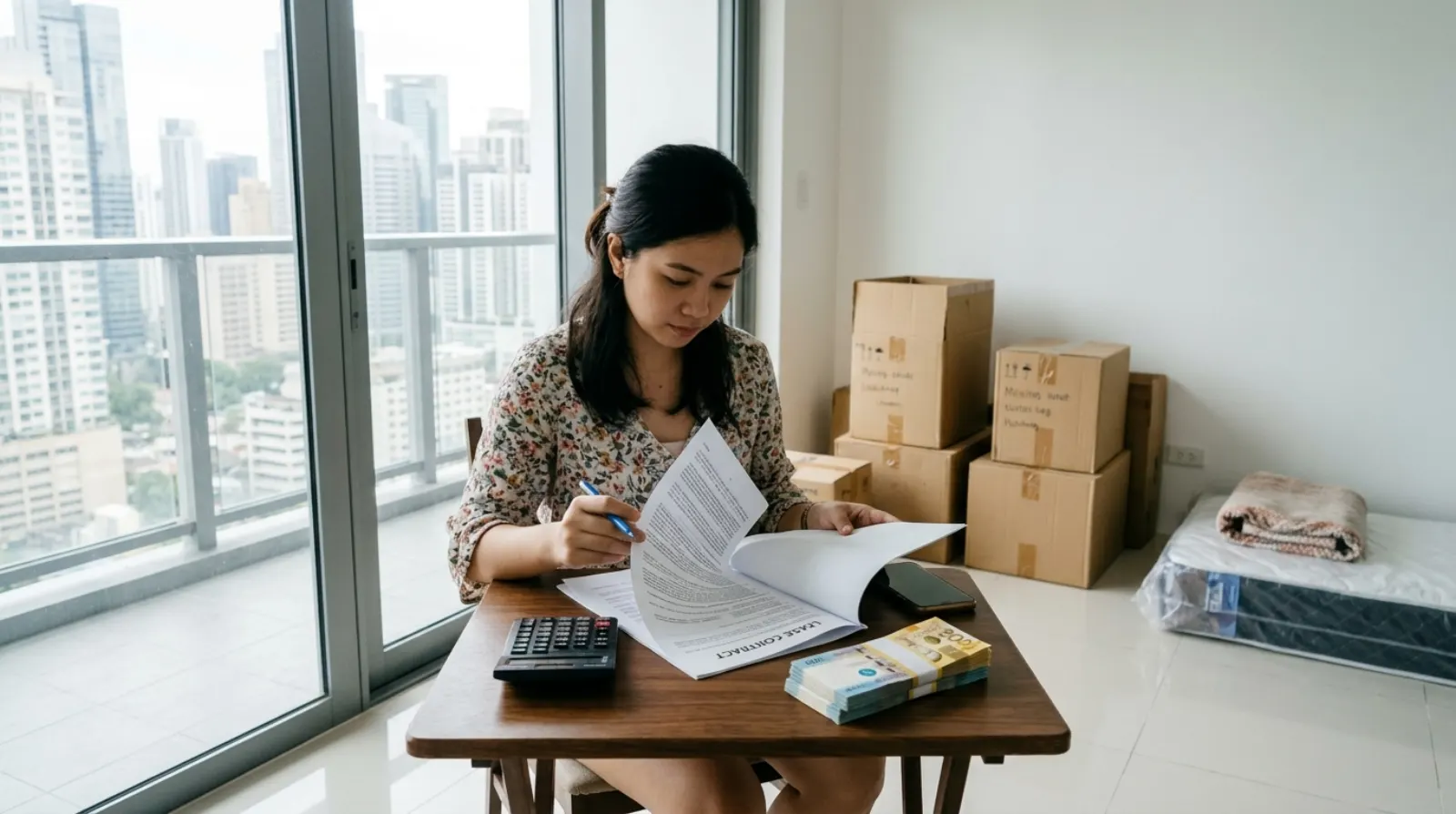
Advance and deposit in the Philippines usually means paying one month's rent in advance plus a two-month security deposit before you move in, so plan for about three months' rent upfront. For residential units covered by rent control, the limit is one month's advance rent and two months' deposit. The 2025–2026 resolution generally covers units renting for ₱10,000 or less, but excludes new units constructed after its approval. Above that, the amount is negotiable, and some condos ask for more. Association fees, utility connections and moving costs come on top.
Quick answer: Budget for 1 month advance + 2 months deposit + roughly ₱5,000–₱20,000 in one-time extras (move-in fees, utilities, internet, notarization, moving). On a ₱18,000 condo, that's about ₱60,000–₱75,000 to get the keys. The peso figures in this guide are indicative planning ranges as of November 2026, not quotes. Your landlord, building and contract set the real numbers.
What does "1 month advance, 2 months deposit" actually mean?
The two payments do different jobs, and many disputes start when tenants treat them as the same thing.
- Advance rent is rent paid early. It usually covers your first month, though some contracts apply it to the last month instead. Read the clause, because it changes when your next payment is due.
- Security deposit is a guarantee, not rent. The landlord holds it against unpaid bills or damage beyond normal wear and tear, then refunds the balance after you move out.
So "1 and 2" on an ₱18,000 unit means ₱18,000 advance plus ₱36,000 deposit, or ₱54,000 before any other fees.
Is there a legal limit on advance and deposit in the Philippines?
Yes, but only for units covered by the Rent Control Act of 2009 (Republic Act No. 9653). Section 7 says a lessor may not demand more than one month advance rent or more than two months deposit. The deposit must be kept in a bank, and any interest it earns goes back to the tenant when the lease ends. The same section says rent is due within the first five days of each month unless the contract says otherwise.
Who is covered? The 2009 law applied to residential units renting at ₱10,000 or less in Metro Manila and other highly urbanized cities, and ₱5,000 or less elsewhere. Rent regulation has since been carried forward by housing-board resolutions. The 2025–2026 resolution generally covers units at ₱10,000 a month or less through December 31, 2026, but excludes units constructed after its approval. Our tenant rights and Rent Control Act guide explains coverage and the yearly increase caps in detail.
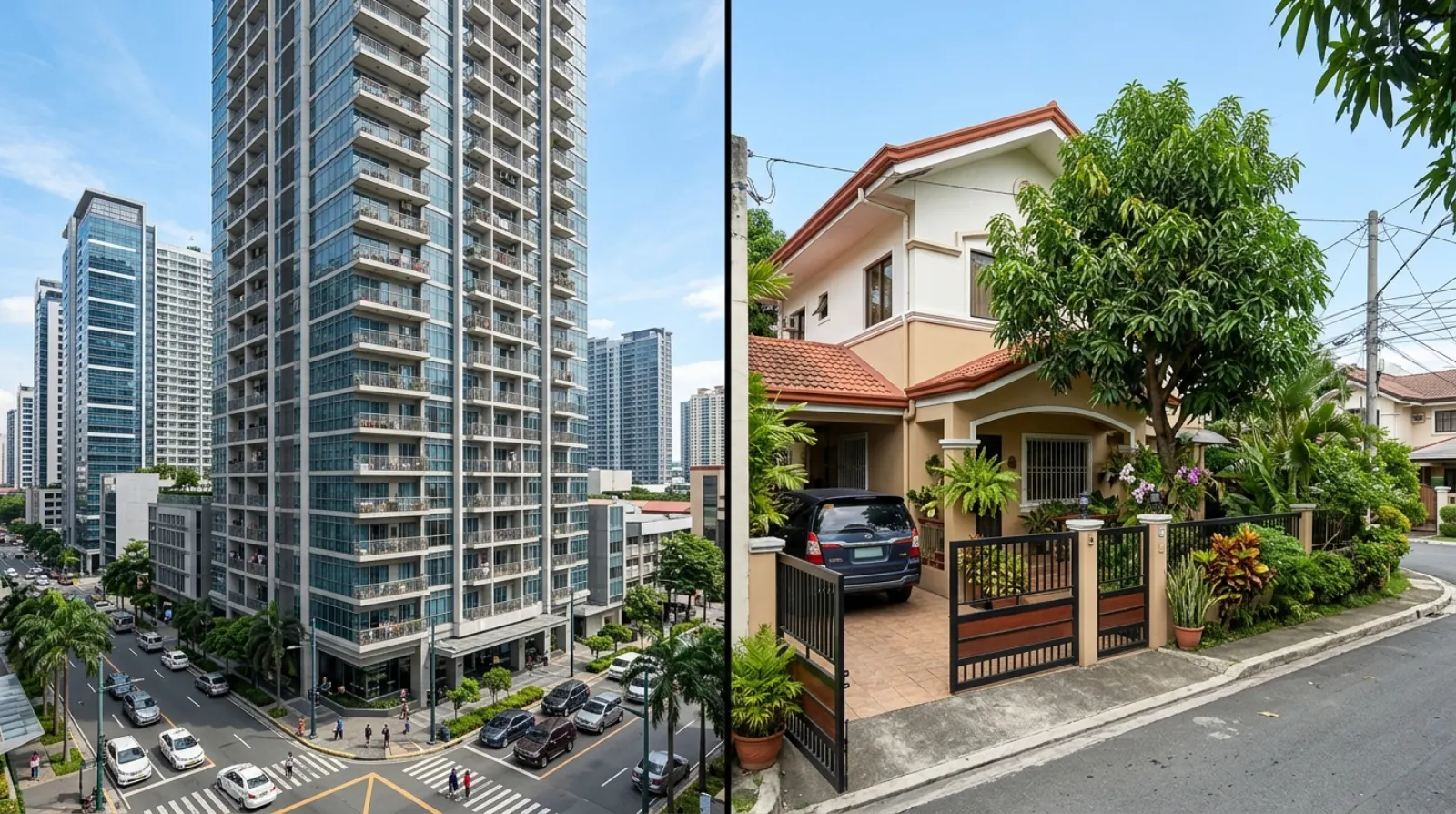
If your rent is above the covered ceiling, the law sets no cap on advance or deposit. The Civil Code leaves it to the contract. That's why some premium condos in BGC or Makati ask for 2 months advance and 2–3 months deposit, especially for furnished units or short-term-friendly buildings.
How much is the total move-in cost? (Sample budgets)
Here's how the upfront cash adds up at three common rent levels. Extras are indicative ranges, not fixed fees.
| Item | ₱10,000 studio (if covered) | ₱18,000 1BR condo | ₱35,000 2BR condo |
|---|---|---|---|
| Advance rent | ₱10,000 (1 mo, legal max) | ₱18,000 (1 mo) | ₱35,000–₱70,000 (1–2 mo) |
| Security deposit | ₱20,000 (2 mo, legal max) | ₱36,000 (2 mo) | ₱70,000–₱105,000 (2–3 mo) |
| Building move-in / admin fees | ₱0–₱2,000 | ₱1,000–₱5,000 | ₱2,000–₱10,000 |
| Utilities, internet install | ₱0–₱3,000 | ₱1,500–₱5,000 | ₱2,000–₱6,000 |
| Notarization, contract copies | ₱300–₱1,000 | ₱500–₱1,500 | ₱500–₱2,000 |
| Moving (truck/van, helpers) | ₱1,000–₱4,000 | ₱2,500–₱8,000 | ₱5,000–₱15,000 |
| Rough total | ₱31,300–₱40,000 | ₱59,500–₱73,500 | ₱114,500–₱208,000 |
Plug your own numbers into the RentCircle rent calculator. It works out move-in cash and also checks whether the monthly rent fits your income. For what units cost by city, see the Metro Manila rental price guide 2026.
What other fees should I expect besides advance and deposit?
Condo move-in and association-related fees
Many condo buildings charge a move-in fee, a refundable construction or move-in bond, or a gate pass and ID fee for the tenant. Monthly association dues are normally the owner's expense, but some leases pass them to the tenant. Ask the landlord which fees you pay, and ask the property management office (PMO) for its tenant move-in requirements before moving day. Most PMOs require a schedule, a list of items, and a copy of the lease.
Utilities: Meralco, water and internet
If the unit already has active Meralco and Maynilad, Manila Water or local water district accounts, you usually just pay the bills under the owner's account. New service applications or transfers can require a bill deposit and paperwork, so ask the landlord which accounts stay in their name. Fiber internet installation is sometimes free with a lock-in plan, and sometimes charged upfront.
Post-dated checks (PDCs)
Condo landlords and agents in Metro Manila often ask for 12 post-dated checks covering the lease year. PDCs aren't extra money, but you need a checking account and enough balance on every date. If you don't have a checkbook, ask whether bank transfer or online payment is accepted. Many landlords now send monthly invoices with online payment links.
Broker's commission
In the Philippine rental market, the broker's fee is customarily paid by the landlord, not the tenant. Still, confirm in writing before you pay any "agent fee". Listings on RentCircle connect you directly with landlords, with no commission charged to renters.
Documentary stamp tax and notarization
Lease contracts are subject to documentary stamp tax under the Tax Code, and notarized contracts are easier to enforce. Who pays these costs is negotiable and should be written into the contract. Check the current rate with the BIR or your landlord's accountant.
Can my landlord ask for a reservation fee?
Many landlords and agents ask for a reservation fee, often a few thousand pesos, to hold a unit while paperwork is prepared. It's legitimate when you've seen the unit, confirmed the owner and received a written acknowledgment that states whether the fee is refundable and whether it will be credited to your advance or deposit. A reservation fee demanded before any viewing, paid to someone you can't verify, is a classic scam pattern. See how to avoid rental scams in the Philippines.
When do I get my security deposit back?
For covered units, RA 9653 says the deposit's bank interest goes back to the tenant when the lease ends. Beyond that, no single national rule sets a refund deadline for every lease. The contract usually does. Many Philippine leases let the landlord hold the deposit for 30 to 60 days after move-out so final Meralco, water and association bills can be settled first. If your contract is silent, agree on a date in writing before you hand over the keys.
What can a landlord legally deduct?
- Unpaid rent and unpaid utility or association charges you're responsible for under the contract.
- Damage beyond normal wear and tear. Under Article 1667 of the Civil Code, a lessee answers for deterioration unless they prove it happened without their fault. That burden doesn't apply to damage from floods, storms, earthquakes or other natural calamities.
- Missing items listed in a signed inventory.
Normal wear such as faded paint, minor scuffs or a worn-out appliance that simply reached its age generally shouldn't come out of your deposit. Ask for an itemized list of deductions with receipts or photos.
Can I use my deposit as my last month's rent?
Only if the landlord agrees in writing. Many Philippine leases expressly prohibit applying the deposit to rent, because the landlord would then have nothing left to cover final bills or damage. Skipping the last month without consent can put you in breach of contract. If you want this arrangement, negotiate it before signing, or ask for it in writing near the end of the lease.
Move-in checklist: protect your advance and deposit
- Verify the owner before paying anything. Match the name on the title, CCT or tax declaration to an ID. If an agent or relative is collecting, ask for a Special Power of Attorney.
- Pay traceably. Use a bank transfer or check to an account in the owner's name, and get an acknowledgment receipt for every peso.
- Put the money terms in the lease: the advance amount and which month it covers, the deposit amount, refund timeline, allowed deductions, and who pays association dues, DST and notarization.
- Do a signed inventory and photo walkthrough on move-in day: walls, floors, appliances, aircon, faucets and water heater. Date-stamped photos are your best evidence later.
- Record meter readings for electricity and water on move-in and move-out.
- Keep every receipt for rent, deposits and fees in one folder or shared drive.
- Give written notice before move-out, as required by your lease (commonly 30–60 days), and request a joint move-out inspection.
Tips to lower your upfront cost
- Negotiate the deposit, not just the rent. For a 1-year lease, some landlords accept 1 month deposit plus 1 month advance from a tenant with solid employment documents.
- Look at rent-controlled units (₱10,000 and below, excluding units built after the 2025–2026 resolution), where the 1+2 limit applies. Studios and rooms in Quezon City, Manila and the provinces often fall in this range. Browse Quezon City rentals or Manila rentals.
- Ask for a move-in date that matches your payday, so your second rent payment isn't due before your first salary in the new place.
- Choose semi-furnished or furnished units if buying a ref, aircon and bed would cost more than a slightly higher monthly rent.
Not legal advice. This guide summarizes RA 9653 and Civil Code rules as we understood them in November 2026. Coverage thresholds and caps are set by housing-board resolutions that change over time. For your specific lease, check with DHSUD, your barangay, or a lawyer.
Ready to compare actual move-in costs? Browse rentals on RentCircle and message landlords directly. Ask about advance, deposit and fees before you schedule a viewing.
Budgeting a move? Try the free rent & move-in cost calculator.
Browse live rentals
Real listings from verified landlords — inquire directly, no commission.
Frequently asked questions
What is the usual advance and deposit for apartments in the Philippines?
The common arrangement is one month advance rent and two months security deposit. For units covered by rent control, the limit is one month's advance and two months' deposit; the 2025–2026 resolution excludes units constructed after its approval. Higher-priced units can ask for more because the amount is negotiable.
Is the security deposit refundable in the Philippines?
Yes. The deposit is refundable after move-out, less any unpaid rent, unpaid bills, or damage beyond normal wear and tear. The refund timing is usually set by your contract, commonly 30 to 60 days after move-out.
Can a landlord ask for 2 months advance and 3 months deposit?
For units covered by the Rent Control Act, no. The limit is 1 month advance and 2 months deposit. For units above the covered rent ceiling, there's no statutory cap, so it depends on what you and the landlord agree to.
Does the tenant pay the broker's fee in the Philippines?
Customarily, the landlord pays the broker's commission on rentals. Confirm in writing before paying any agent fee yourself.
Does the landlord have to keep my deposit in a bank?
For units covered by RA 9653, yes. Section 7 requires the deposit to be kept in a bank, with any interest returned to the tenant when the lease expires.