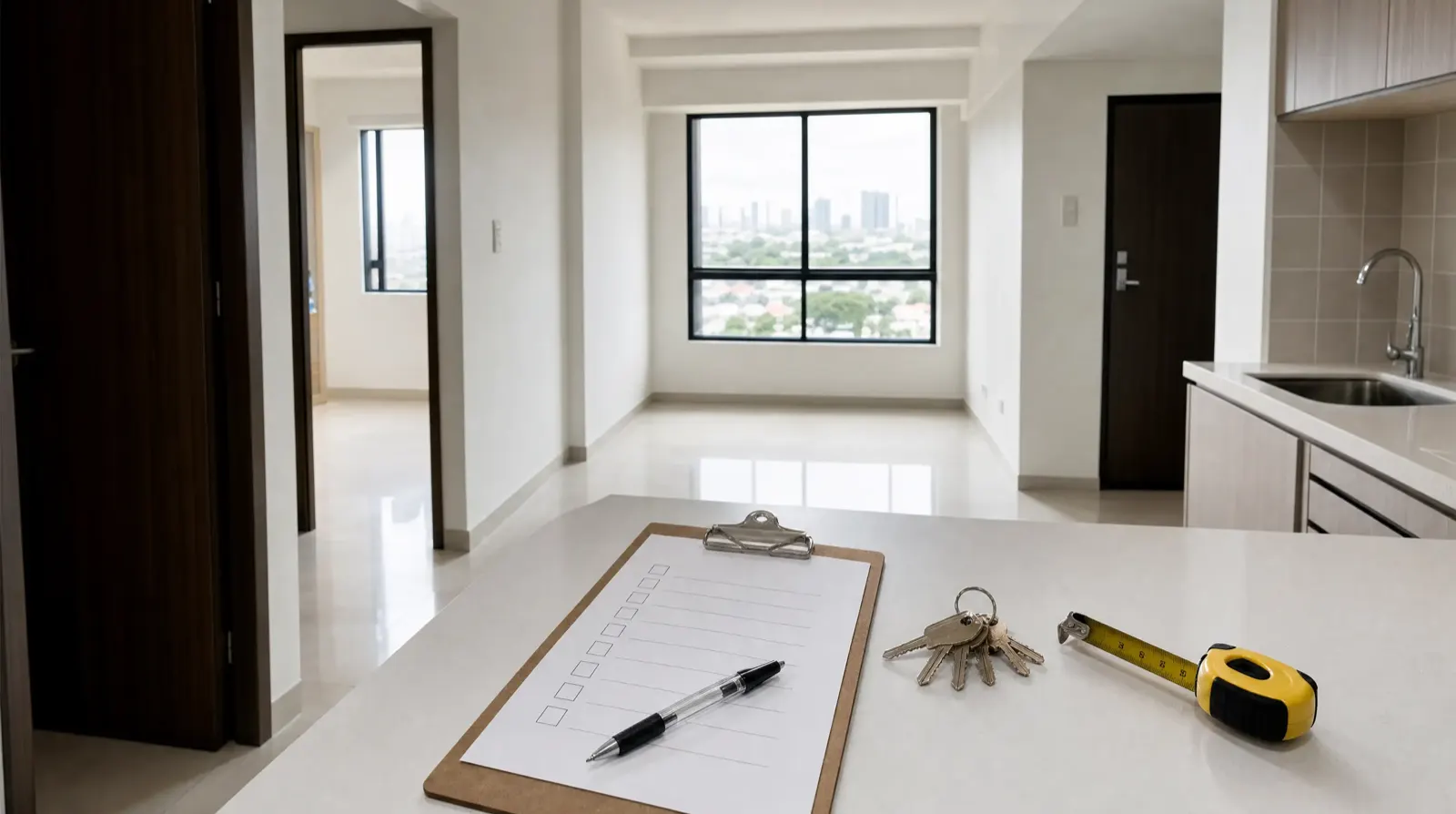
Tenant Red Flags and Green Flags: A Philippine Landlord's Guide

Tenant red flags are things a person does that predict trouble: they won't sign a written lease, they push to pay outside a paper trail, their story about their income or past rentals keeps changing, or they rush you to hand over the keys before you've checked anything. Green flags are the opposite: clear communication, documents provided on time, honest questions, and respect for house rules from the first viewing. This guide lists the most useful red flags and green flags for Philippine landlords at each stage (inquiry, viewing, application and tenancy), with what to do about each and how to screen fairly.
Quick answer. Judge behaviour, not background. Use one written checklist for every applicant. Verify identity, income and rental history the same way for everyone. Write down why you said yes or no. A single red flag is a reason to ask a follow-up question, not proof of a bad tenant. A pattern of red flags is a reason to walk away.
What are tenant red flags and green flags?
A red flag is a behaviour that, in a landlord's experience, often comes before late rent, damage, disputes or scams. A green flag is a behaviour that suggests the person will communicate well, pay on time and treat your unit like a home. Neither is a guarantee. People have bad months, and honest people get nervous during viewings. The point of a list is consistency. When you look for the same things in every applicant, you make better decisions and treat people more fairly.
What a red flag is not: someone's age, gender, religion, ethnicity, accent, family size, civil status, disability, or the fact that they are a student, work night shift, or have a family member abroad. These say nothing reliable about how someone pays rent. Screening on them is unfair, it shrinks your pool of good tenants, and in some situations it may expose you to legal complaints. Stick to behaviour and verifiable facts.
Red flags and green flags at the inquiry stage
The first message tells you a lot. Here's what to watch for when inquiries come in from your listing, Facebook or a referral.
| Red flag | Green flag | What to do |
|---|---|---|
| Offers to pay more than asking rent, or several months upfront, before seeing the unit | Asks what's included (dues, water, internet, parking) and when it's available | Thank them, keep your normal process. Overpayment offers are a classic setup for refund scams. |
| Wants to reserve "now na" without viewing and asks to send the money to a third party | Proposes a viewing time and shows up on schedule | Never accept a reservation before screening. Never pay out "refunds" to a different account. |
| Refuses to give a full name or a working number | Introduces themselves, their move-in date and who will live in the unit | Ask politely for basic details. Someone serious will give them. |
| Asks if you'll skip the lease "para mabilis" | Asks to see the lease terms in advance | Share a draft lease early. Good tenants like knowing the rules. |
Many inquiry red flags overlap with scam patterns that target both sides of a rental. Our guide on how to avoid rental scams in the Philippines covers fake payment screenshots, overpayment refunds and identity tricks in detail.
What to look for during a viewing
Red flags at the viewing
- Pressure to skip steps. "Can I just move in tomorrow? I'll do the papers later." Urgency is fine; refusing the process is not.
- Disrespect for the building's rules. Arguing with the guard about logging in, or dismissing HOA or condo association rules on pets, parking or renovations.
- Plans that don't match the unit. A one-bedroom for "just me" but later mention of several housemates, or a residential unit they plan to use as a shop or a short-term rental without asking.
- Asking you to stretch the truth. For example, asking you to write a different rent on the contract for a visa, loan or company reimbursement.
Green flags at the viewing
- They check water pressure, outlets and aircon, and ask about flooding during typhoon season. Careful tenants are usually careful with your property too.
- They're upfront about pets, the number of occupants, work-from-home needs or a night-shift schedule.
- They ask how repairs are reported and how rent is paid. That's someone planning to follow a system.
What to do: write a few notes after every viewing, in the same format for everyone. Notes made on the day are much more reliable than memory a week later, when you're comparing three applicants.
Application red flags: documents and stories that don't add up
This is where most problems can be caught. A typical Philippine application asks for a valid government ID, proof of income (payslips, a certificate of employment, an employment contract, bank statements or ITR for the self-employed), and a previous landlord's contact. Our guide to pricing your rental and screening tenants has the full step-by-step screening process; here's how to read what comes back.
| Red flag | Green flag |
|---|---|
| Name, birthday or photo differs across documents | Documents match each other and the person you met |
| Payslips or a COE that can't be confirmed, or an employer number that goes nowhere | Gives HR contact details and lets you verify employment |
| Rent would take most of their stated income, with no savings or co-payer | Rent fits their budget comfortably, or a co-signer or co-tenant is named on the lease |
| No previous landlord to call, and vague about why they're moving | A past landlord who confirms on-time rent and a clean move-out |
| The previous landlord is suspiciously glowing, sounds like a friend, and can't confirm the address | A reference who gives specific, checkable details |
| Wants to pay advance and deposit only in cash, with no receipt | Prefers bank transfer or e-wallet and asks for an official receipt |
Two cautions. First, "no rental history" is not a red flag on its own. Fresh graduates, people leaving their family home and newly arrived workers all start somewhere. Ask for other evidence instead, such as a job offer, savings or a co-signer. Second, a landlord who badmouths a former tenant may be hiding their own problems. Ask factual questions: Did they pay on time? Did they leave with notice? Was the deposit returned in full?
Budgeting matters on both sides. If you're unsure whether an applicant's income covers the rent and move-in costs, the rent calculator gives a quick affordability check you can share with the applicant.
Red flags and green flags during the tenancy
Screening doesn't end at move-in. These signs during the lease help you spot problems early, while they're still easy to fix.
Early warning signs
- Payment drift. Rent that used to arrive on the 5th now arrives on the 12th, then the 20th, with no message.
- Going silent. Not answering messages about rent, repairs or inspections.
- Unreported damage or leaks. You find out about a ceiling leak from the neighbour below.
- Unapproved occupants or subleasing. New people living there, or the unit appearing on a short-term rental site. Under the Rent Control Act, subleasing without the landlord's written consent is one of the listed grounds for ejectment for covered units.
- Repeated complaints from neighbours or the admin office about noise, garbage or parking.
Green flags worth rewarding
- Pays on or before the due date, or messages ahead when a payment will be late, with a plan.
- Reports small problems quickly, before they become big repairs.
- Gives notice well before moving out and leaves the unit clean.
- Follows building rules without being reminded.
Reward green-flag tenants. A modest or zero increase at renewal, fast repairs and a thank-you message are cheaper than a month of vacancy and a new search. Our landlord-tenant relationship tips cover how to keep good tenants longer.
What should a landlord do when a red flag appears?
- Ask, don't assume. "I couldn't reach the number on your COE. Is there another HR contact?" Many red flags have innocent explanations.
- Ask for more evidence, applied consistently. Bank statements, a co-signer, or a second reference. If you ask one applicant, be ready to ask anyone in the same situation.
- Put it in writing. For tenancy issues, send a calm written message that states the facts, the lease term and the fix you want, with a date.
- Use the lease and the law, not pressure. Don't cut utilities, change locks or remove belongings to force someone out. For covered units, the Rent Control Act lists grounds for ejectment, such as arrears of three months. Disputes between people living in the same city or municipality usually go to barangay conciliation first. Talk to a lawyer before any eviction.
- Walk away from patterns. One late document is normal. A changing story, refusal to verify anything and pressure to pay cash all at once is a pattern. It's fine to say no politely.
Not legal advice. This guide summarises general practice and rules as of November 2026, including RA 9653 (Rent Control Act) and RA 10173 (Data Privacy Act). Rules depend on your unit and situation. For specific cases, check with a lawyer, DHSUD, the National Privacy Commission or your barangay or LGU.
How to screen tenants fairly in the Philippines
Fair screening is also good business. It widens your pool of qualified tenants and gives you a clear record if anyone questions your decision.
- Write your criteria before you list. For example: income of roughly three times the rent (or a co-signer), a valid ID, one reference, and a maximum number of occupants for the unit size. Apply them to everyone.
- Judge behaviour and facts, not identity. Don't reject or rank applicants by age, gender, religion, ethnicity, disability, civil status, having children, or where a family member works. Ask everyone the same questions.
- Collect only what you need. The Data Privacy Act requires a legitimate purpose and proportionality. Explain why you need each document, store copies securely, and delete them for applicants you don't accept once you no longer need them.
- Keep deposit terms within the rules. For units covered by the Rent Control Act, the limit is one month advance and two months deposit. See our advance and deposit guide.
- Give a clear answer. Tell applicants yes or no promptly. If it's no, a short, polite message is enough.
Want to understand what different renters need before you screen them? Our guide to the types of tenants in the Philippines covers students, night-shift workers, families, expats and more. And for a full pre-listing to-do list, see the landlord checklist.
How a rental app helps you spot red flags early
Many tenancy red flags are about patterns: payment drift, unanswered messages, repairs reported late. Those are hard to see when your records live in a notebook, three chat apps and your bank history. RentCircle keeps tenant and unit records, invoices and receipts in one place. It sends automatic rent reminders by SMS and email and tracks partial payments, so you can see when "a few days late" is becoming a habit. Tenants get a portal (PayRent.to) with their invoices, receipts and payment history. Repairs come in as maintenance requests, and conversations stay in the landlord-tenant inbox instead of scattered texts.
Every new landlord account starts with a free 7-day trial, no card needed. You can also list your unit free on rentcircle.ph, with inquiries going straight to you and no commission. Download the app or see how RentCircle works for landlords. The full checklist on what to do with your first week is in our free trial getting-started guide.
Budgeting a move? Try the free rent & move-in cost calculator.
For property owners
Own a unit here? List it free and find a tenant directly.
Post up to 3 listings free, with no commission. Renters message you directly. When someone moves in, try the RentCircle app free to send invoices, rent reminders and collect payments.
Browse live rentals
Real listings from verified landlords — inquire directly, no commission.
Frequently asked questions
What are the biggest red flags when choosing a tenant?
The most reliable warning signs are behaviours: refusing a written lease, documents that don't match or can't be verified, pressure to pay or move in before screening, overpayment offers, and a story about income or past rentals that keeps changing.
Is having no rental history a red flag?
Not on its own. First-time renters such as fresh graduates or people leaving their family home have no landlord reference. Ask for other evidence instead, such as proof of income, savings or a co-signer.
Can I reject a tenant because they are a student or work night shift?
Judge each applicant on behaviour and verifiable facts, such as income, references and how they communicate, not on their job type or schedule. Write your criteria down and apply them the same way to everyone.
What should I do if a good tenant starts paying late?
Reach out early with a calm written message, ask what changed, and agree on a dated plan. Automatic reminders and partial-payment tracking help you catch the pattern before it becomes months of arrears.
Is it legal to ask tenants for an NBI clearance or payslips?
Many Philippine landlords ask for these. Under the Data Privacy Act, collect only what you need for screening, explain why, ask every applicant consistently, and store and delete the copies securely.
What renters & landlords are saying
Share your experience with “Tenant Red Flags and Green Flags: A Philippine Landlord's Guide” — rent you pay, commute tips, what to watch out for.