The Complete Landlord Checklist for the Philippines (Printable)
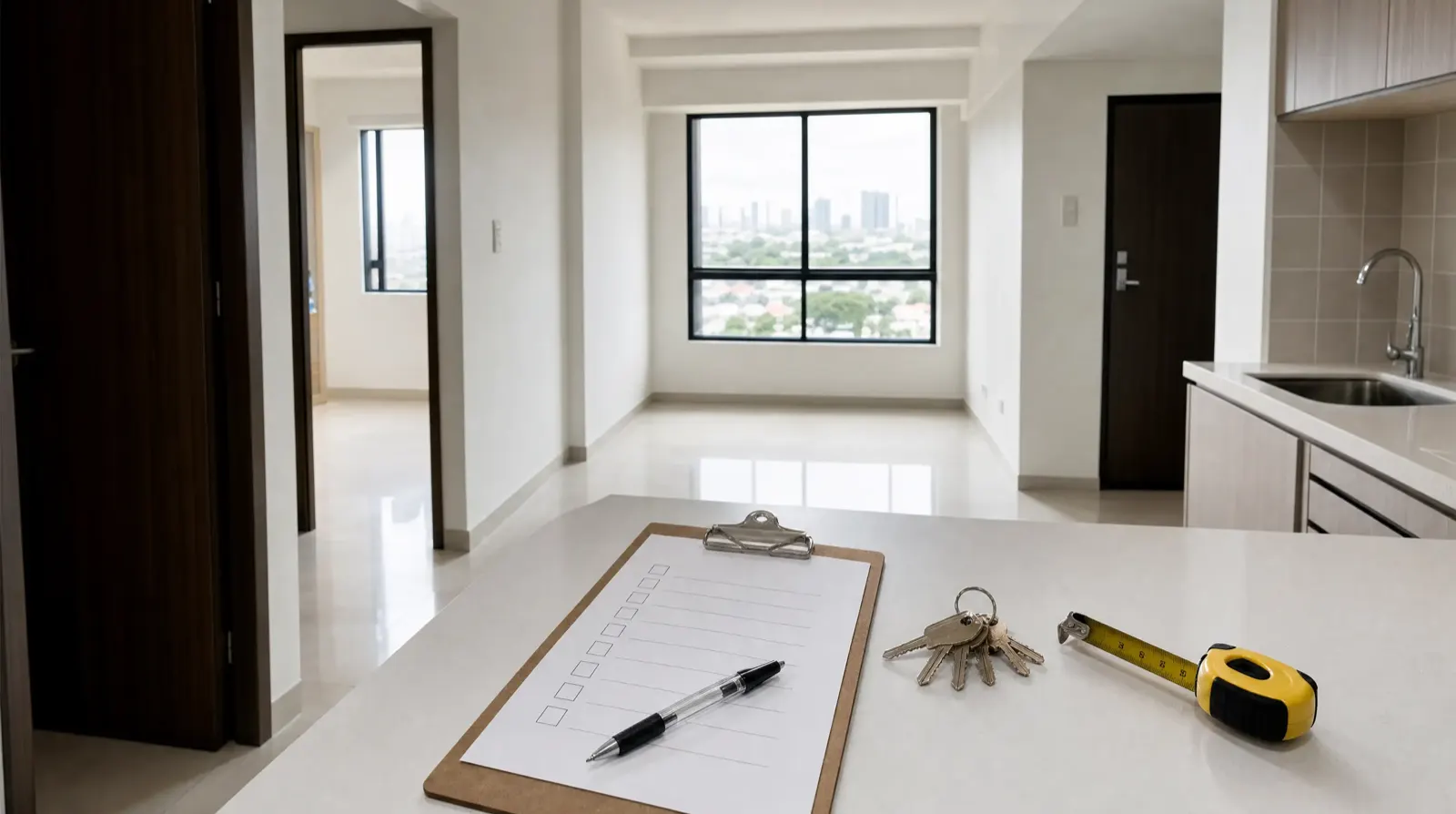
A complete landlord checklist for the Philippines covers five stages: getting the property ready and legal before you list, screening tenants, signing the contract and handling move-in, running the tenancy month to month, and closing it out at move-out with a fair deposit return. Below is a printable checklist for each stage. Tick through it for every unit and every new tenant.
It's written for small and growing landlords renting out condos, apartments, houses and rooms, as of November 2026. Rules on permits vary by LGU and building. Treat the legal items as things to confirm, not as final answers.
Not legal or tax advice. This checklist summarizes general rules, including RA 9653 (Rent Control Act), the Civil Code and BIR registration requirements. Permit requirements differ by city, municipality and condo corporation. Check with your LGU, barangay, building administration, the BIR or a lawyer for your situation.
Stage 1: Landlord checklist before listing your property
Papers and permits
- ☐ Proof of ownership or authority to lease: title or CCT, contract to sell, or a special power of attorney if someone else owns it. The Civil Code requires an SPA to lease real property for more than one year on another person's behalf.
- ☐ Real property tax (amilyar) paid and receipts on file.
- ☐ BIR registration for your rental income, and a plan for issuing invoices or receipts. See our rental income tax guide.
- ☐ Ask your city or municipal hall whether you need a business/mayor's permit to lease, and what it requires. Many LGUs ask for a barangay clearance first.
- ☐ For multi-unit buildings, apartments or boarding houses, ask whether a Fire Safety Inspection Certificate (FSIC) from the Bureau of Fire Protection is required as part of permitting.
- ☐ Condo or subdivision: read the house rules or HOA rules on leasing. Look for tenant registration, move-in permits, pet rules, parking, short-term rental bans and any leasing fees.
- ☐ Association dues updated. Many buildings won't issue move-in permits if dues are in arrears.
Safety and condition
- ☐ Working smoke detector and at least one fire extinguisher.
- ☐ Electrical check: no exposed wiring, breakers labeled, outlets not overloaded.
- ☐ Plumbing: no leaks, water pressure fine, drains clear, water heater safe.
- ☐ Locks changed or re-keyed between tenants; window grills have an escape option where possible.
- ☐ Check flood and hazard exposure honestly (HazardHunterPH helps). Renters will check too; see our flood-safe renting checklist.
- ☐ Aircon cleaned, appliances working, and a list of what's included.
Pricing and marketing
- ☐ Price from 5–10 real comparables nearby. Our guide on pricing and screening shows how.
- ☐ Check your yield and break-even with the rent calculator.
- ☐ Check whether the unit falls under the Rent Control Act (₱10,000 and below in NCR and highly urbanized cities, ₱5,000 and below elsewhere).
- ☐ Bright, honest daytime photos of every room, plus the building, parking and view.
- ☐ Description lists rent, dues, inclusions, advance and deposit, minimum term, pet policy and nearest transport.
- ☐ List it. You can post free on rentcircle.ph, where renters inquire with you directly and there's no commission.
Stage 2: Tenant screening checklist
- ☐ Use the same written criteria for every applicant: income, rental history, number of occupants, pets, move-in date.
- ☐ Verify identity with a valid government ID, and confirm the name matches whoever will sign.
- ☐ Verify income: payslips, certificate of employment, or bank statements for freelancers and business owners. A common rule of thumb is rent at around a third of monthly income or less.
- ☐ Call a previous landlord, if any, and ask whether they paid on time and how they left the unit.
- ☐ Meet in person or by video call. Watch for pressure tactics and inconsistent stories.
- ☐ Collect only the personal data you need, keep it secure, and tell applicants why you need it (Data Privacy Act, RA 10173).
- ☐ Never accept a "reservation" or advance before you've verified the applicant and they've seen the unit. Scams run both ways, see how to avoid rental scams.
For what to look for (and what to worry about), read tenant red flags and green flags and types of tenants in the Philippines.
Stage 3: Contract and move-in checklist
The lease contract
- ☐ Full names of parties and all adult occupants; unit address.
- ☐ Monthly rent, due date, accepted payment methods and late-payment terms.
- ☐ Term (start and end dates), renewal process and notice period for leaving.
- ☐ Advance and deposit amounts, and how and when the deposit will be returned.
- ☐ Who pays what: Meralco, water (Maynilad, Manila Water or the local water district), internet, association dues, minor repairs.
- ☐ House rules: pets, smoking, guests, subleasing (needs your written consent), noise, building rules.
- ☐ Entry notice: how much notice you give before inspections or repairs, except emergencies.
- ☐ Signed by both parties; consider notarizing longer leases.
Advance and deposit within legal limits
For units covered by the Rent Control Act, you cannot demand more than one month advance rent or more than two months deposit. The deposit should be kept in a bank under your name for the duration of the lease, and any interest earned goes back to the tenant at the end. You may deduct unpaid bills and damage beyond normal wear and tear. Many landlords use the same "one month advance, two months deposit" setup for higher-rent units as well. Our advance and deposit guide explains the details from the tenant side.
| Item | Typical | Notes |
|---|---|---|
| Advance rent | 1 month: ₱15,000 | Covered units: max 1 month |
| Security deposit | 2 months: ₱30,000 | Covered units: max 2 months, kept in a bank |
| Condo move-in fees or bond | Varies | Set by building admin; state who pays |
| Receipt | Always | Issue one for every amount received |
Move-in day
- ☐ Inventory and condition report, signed by both of you, room by room, with dated photos or video.
- ☐ Opening meter readings for electricity and water, photographed.
- ☐ Keys, cards and remotes handed over, with a count recorded.
- ☐ Tenant registered with the condo admin or HOA if required.
- ☐ Show the main water valve, breaker panel and fire exits.
- ☐ Tenant record set up with contract dates, rent, deposit and contact details.
- ☐ Receipts issued for advance and deposit.
Stage 4: During the tenancy — monthly, quarterly, yearly tasks
| Frequency | Tasks |
|---|---|
| Monthly | Send rent reminder before due date; record payments and partial payments; issue receipts; follow up on balances; pay dues or bills you cover; reply to maintenance requests |
| Quarterly | Reconcile income and expenses; file quarterly BIR returns (generally May 15, Aug 15, Nov 15 for individuals); check smoke detectors; review late-payment patterns |
| Before rainy season (around May) | Roof, gutters, drains, window seals; remind tenants about typhoon prep |
| Yearly | Pay amilyar (due January 31 if paid in full); renew business permit if required; annual BIR return (April 15); aircon cleaning; walkthrough inspection with notice; review rent against market and any NHSB cap |
| 60–90 days before lease end | Discuss renewal; send written notice of any rent change; start marketing if they're leaving |
On rent increases for covered units, NHSB Resolution No. 2024-01 set caps of 2.3% for 2025 and 1% for 2026 for the same tenant. As of November 2026, we found no published 2027 resolution, so check before renewals. Our landlord goals for 2027 guide has a fuller year plan.
The monthly row is where most landlords lose time. RentCircle automates it: rent reminders by SMS and email, invoices and branded PDF receipts, partial-payment tracking with balances carried forward, and online payments through the PayRent.to tenant portal. You also get maintenance requests, announcements, inbox chat, and expense tracking with profit/loss reports for the quarterly row. Every new landlord account starts with a 7-day free trial, no card needed.
Stage 5: Move-out and deposit return checklist
- ☐ Written notice received and move-out date confirmed.
- ☐ Final meter readings photographed; final utility bills requested or estimated.
- ☐ Joint walkthrough using the move-in inventory and photos.
- ☐ Separate normal wear and tear (faded paint, minor scuffs) from damage (broken fixtures, holes, missing items).
- ☐ Keys, cards and remotes returned and counted.
- ☐ Building clearance or move-out permit, if required.
- ☐ Itemized statement of deductions with receipts or quotes.
- ☐ Deposit balance, plus any bank interest earned, returned within the period stated in your contract.
- ☐ Final receipt issued and the tenant record closed.
- ☐ Unit repaired, cleaned and re-listed.
Tip: RA 9653 doesn't fix a number of days for returning the deposit, so write a clear deadline into your lease (for example, within 30 days after move-out and final bills). Stick to it. Deposit disputes are among the most common reasons landlord–tenant relationships go sour. More on that in our landlord–tenant relationship tips.
Printable one-page summary
- Before listing: ownership papers, amilyar, BIR, LGU/barangay permits, condo/HOA rules, safety check, comparables, photos.
- Screening: same criteria for all, ID, income, references, privacy, no money before verification.
- Contract: rent, due date, term, advance (max 1 month) and deposit (max 2 months) for covered units, utilities, house rules, entry notice.
- Move-in: signed inventory, photos, meter readings, keys, receipts.
- Tenancy: monthly reminders and receipts, quarterly tax and safety checks, yearly amilyar, permits and inspection.
- Move-out: walkthrough, itemized deductions, deposit return on time, re-list.
Put the checklist on autopilot
A checklist only works if you keep using it. Download RentCircle on the App Store, Google Play or the web to keep tenant and unit records, reminders, receipts and repairs in one place. Your 7-day free trial starts automatically, no card needed. Ready to fill a unit? List it free on rentcircle.ph and get direct inquiries.
Budgeting a move? Try the free rent & move-in cost calculator.
For property owners
Own a unit here? List it free and find a tenant directly.
Post up to 3 listings free, with no commission. Renters message you directly. When someone moves in, try the RentCircle app free to send invoices, rent reminders and collect payments.
Browse live rentals
Real listings from verified landlords — inquire directly, no commission.
Frequently asked questions
What permits do I need to rent out property in the Philippines?
You need to register your rental income with the BIR. Many LGUs also require a business or mayor's permit for leasing, usually after a barangay clearance, and some require fire safety inspection for multi-unit buildings. Requirements vary, so ask your city or municipal hall and your condo or HOA.
How much advance and deposit can a landlord ask for?
For units covered by the Rent Control Act, the maximum is one month advance and two months deposit, with the deposit kept in a bank and any interest returned to the tenant. Higher-rent units follow the contract, though many landlords use the same setup.
What should be in a move-in inventory?
List every room's fixtures, appliances and furniture with their condition, take dated photos or video, record opening meter readings and key counts, and have both landlord and tenant sign it.
How long does a landlord have to return a security deposit?
RA 9653 does not set a specific number of days, so the lease should state a clear deadline. Return the balance with an itemized list of any deductions for unpaid bills or damage beyond normal wear and tear.
What are a landlord's yearly tasks in the Philippines?
Pay real property tax, renew any required business permit, file the annual income tax return, clean aircons, do a noticed inspection, prepare for rainy season and review rent against the market and any rent-control cap.
What renters & landlords are saying
Share your experience with “The Complete Landlord Checklist for the Philippines (Printable)” — rent you pay, commute tips, what to watch out for.