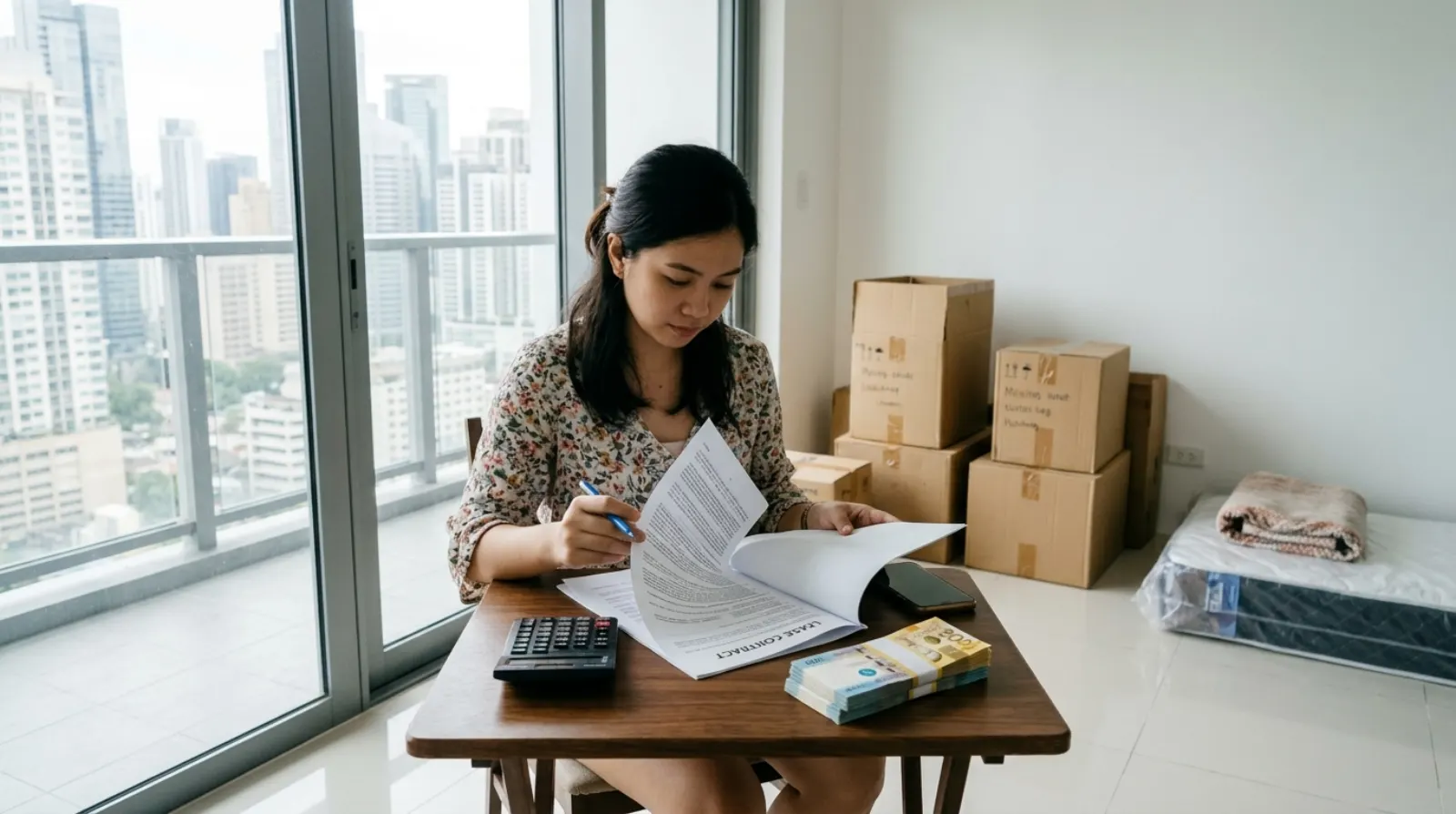
Typhoon and Flood-Safe Renting Checklist for the Philippines
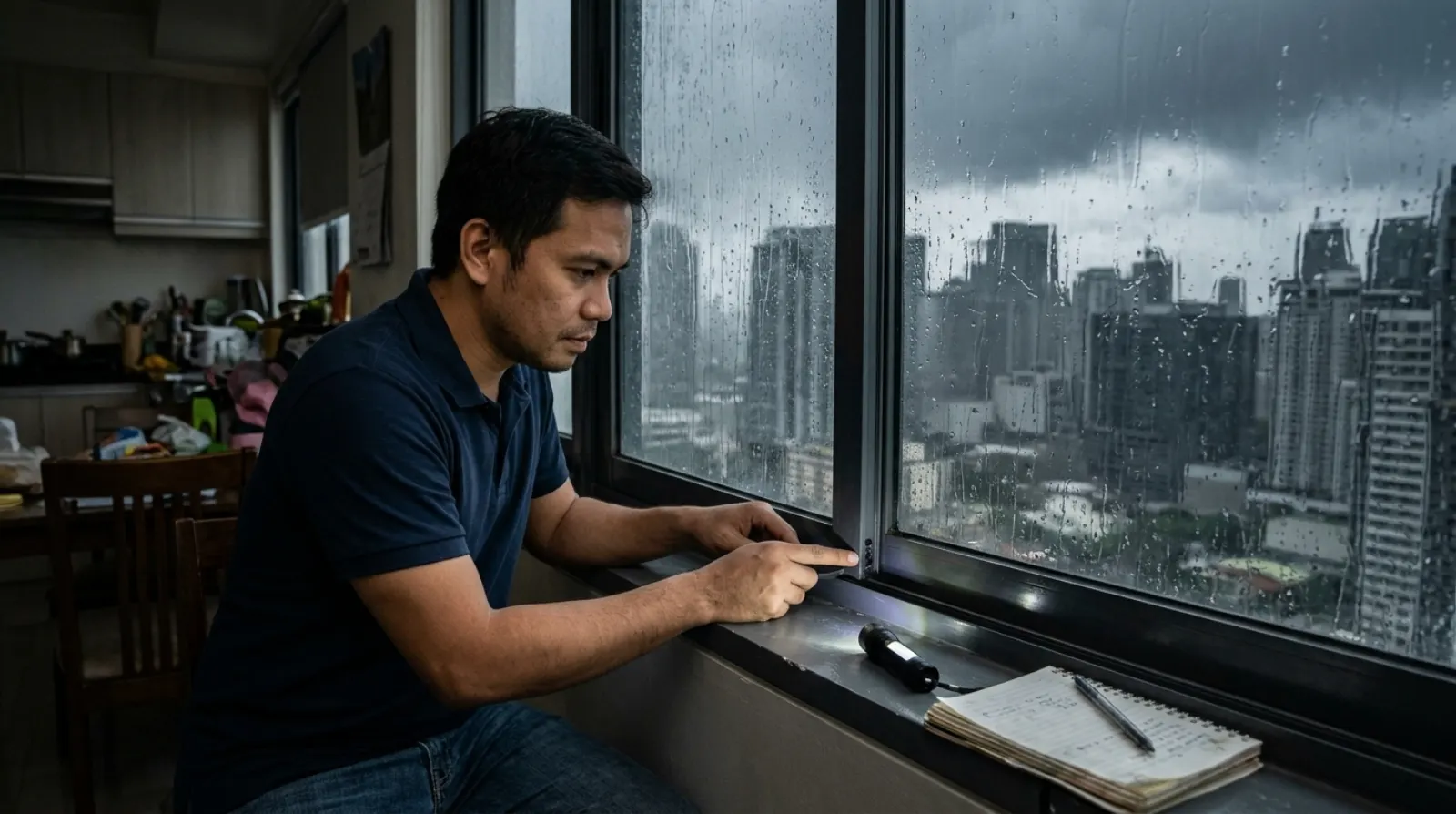
A typhoon and flood-safe rental in the Philippines is one where the street, the parking and the unit itself stay dry in a heavy habagat or typhoon, the building keeps water and power running, and the lease says who fixes storm damage. Before you sign, check the address on a government hazard map, ask neighbors how high the flood gets, inspect for water marks and leaks, and choose a higher floor if the area floods. About 20 tropical cyclones enter the Philippine Area of Responsibility each year, so this checklist is worth 30 minutes of your time.
Quick answer: (1) Look up the exact address on HazardHunterPH. (2) Ask the guard, sari-sari store owner or barangay: "Gaano kataas ang baha dito?" (3) Inspect walls, ceilings and the electrical panel. (4) Ask about the generator, water tank and basement parking. (5) Put storm-damage and repair rules in the lease.
How often do typhoons and floods hit the Philippines?
PAGASA says an average of about 20 tropical cyclones enter the Philippine Area of Responsibility (PAR) each year, and about 8 or 9 of them cross the country. Typhoon season peaks from July to October. The southwest monsoon (habagat) can also bring days of heavy rain and flooding even without a typhoon making landfall. If you're moving in May or June, you'll face your first wet season within weeks, so check flood risk before you pay the deposit.
How do I check if a rental is in a flood-prone area?
1. Use official hazard maps
- HazardHunterPH (GeoRiskPH, led by DOST-PHIVOLCS). Enter or pin the address to generate an indicative hazard report covering flood, rain-induced landslide, storm surge, earthquake and volcanic hazards. Flood susceptibility layers come from DENR-MGB.
- UP NOAH, the University of the Philippines' hazard mapping center, for flood and storm-surge maps.
These maps are indicative, not a guarantee. A "low" rating doesn't mean the street never floods, because a clogged drainage canal or a new development nearby can change things.
2. Ask people who've lived through a typhoon there
Ask the building guard, a tricycle driver, a sari-sari store owner, or the barangay hall. Ask specific questions: How high did the water reach during the last big typhoon? Up to the ankle, the knee or the waist? How long before it subsided? Was the road to the main highway passable?
3. Look for physical clues on the street
- Houses and shops built on raised foundations, or with steps up to the front door.
- Water lines or stains on perimeter walls and gates.
- Sandbags, flood barriers or raised ref and cabinet stands in neighboring homes.
- A creek, estero, river or low-lying rice field nearby.
- Cars parked on the street's high side, or on sidewalks, during rainy months.
Typhoon-safe rental inspection checklist
| Check | What good looks like | Red flag |
|---|---|---|
| Ceilings and walls | Clean, even paint | Brown water rings, bubbling paint, fresh patch-paint in one spot |
| Windows and sliding doors | Intact rubber seals, working locks, weep holes clear | Gaps, rust, swollen wooden frames, puddle marks on the floor |
| Roof (houses, townhouses) | Recently maintained GI sheets or tiles, clean gutters | Rusted sheets, missing screws, sagging gutters |
| Floors and baseboards | Level tiles, dry grout | Musty smell, mold in corners, warped laminate |
| Electrical panel and outlets | Breaker panel mounted high, outlets above likely flood height | Panel or outlets at floor level in a flood-prone area |
| Drainage | Floor drains on balconies and service areas, clear street canals | Clogged drains, trash-filled canal outside |
| Water supply | Water tank or cistern with pump | Direct line only in an area with frequent Maynilad or Manila Water interruptions |
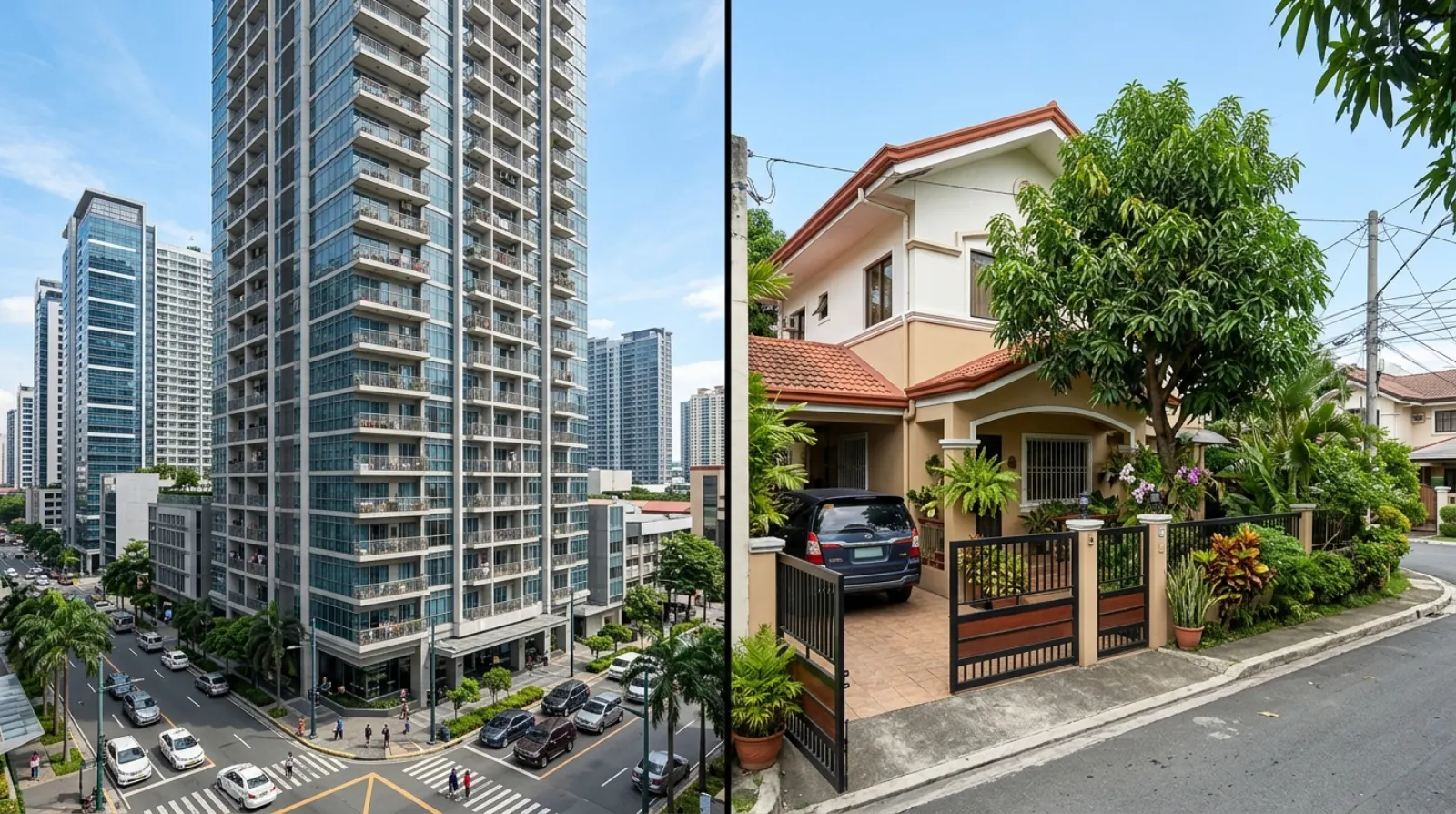
Condo, house or townhouse: which is safer in a typhoon?
Condos
A unit on a higher floor stays dry, but the building still matters. Ask the property management office:
- Does the building have a backup generator, and does it cover elevators and water pumps, or only hallway lights?
- Has the basement parking ever flooded? Where do residents move cars when a typhoon comes?
- Are windows rated for strong winds, and does the PMO send typhoon advisories to residents?
Ground-floor and podium units in flood-prone areas carry the most risk.
Houses and townhouses
Elevation of the lot and the street is everything. A two-storey townhouse lets you move valuables upstairs, but the ground floor may still take water. Check how the subdivision's drainage performed in recent storms, and whether the HOA clears canals before the rainy season. For a deeper comparison, see townhouse vs single-detached house rentals and condo vs house renting.
Who pays for typhoon or flood damage in a rental?
The Civil Code (RA 386) sets the default rules, and your lease can add to them:
- Landlord repairs (Art. 1654): The landlord must make necessary repairs to keep the unit fit for use, unless the contract says otherwise. Roof leaks, broken windows and storm-damaged doors usually fall here.
- Tenant must report promptly (Art. 1663): Tell the owner about needed repairs as soon as possible. If you don't, you may be liable for damage caused by the delay.
- Floods and storms aren't your fault (Art. 1667): Normally, a tenant must prove damage happened without their fault. That burden doesn't apply when damage is caused by flood, storm or other natural calamity.
- Destroyed or partly destroyed unit (Art. 1655): If the unit is totally destroyed by a fortuitous event, the lease ends. If it's partly destroyed, you can choose a proportional rent reduction or cancel the lease.
- Dangerous to live in (Art. 1660): If the unit's condition seriously endangers life or health, you may terminate the lease at once by notifying the landlord.
Your own belongings, such as gadgets, furniture and appliances you brought, are generally not the landlord's responsibility. Some insurers offer home contents or personal property cover for renters. Ask your insurer what it includes for flood and typhoon damage.
Clauses worth adding to your lease
- Who repairs storm damage, and how fast (for example, the landlord starts urgent repairs within a set number of days of notice).
- Rent adjustment if part of the unit is unusable after a storm.
- Whether you may do emergency repairs and deduct the receipted cost, with notice.
- Who handles water-damaged landlord-owned appliances and furniture.
Our tenant rights guide covers the rest of your rights under the Civil Code and the Rent Control Act.
What should renters do when a typhoon signal is raised?
PAGASA uses five Tropical Cyclone Wind Signals, from Signal No. 1 (strong winds expected) up to Signal No. 5 (extreme typhoon-force winds from a super typhoon). For rain, PAGASA's color-coded heavy rainfall warnings mean: Yellow, flooding possible in low-lying areas; Orange, flooding is threatening; Red, serious flooding expected, so evacuate if your area is at risk.
Before the storm
- Charge phones and power banks, and fill water containers.
- Move documents, electronics and valuables to high shelves or an upper floor. Keep IDs, your lease and receipts in a waterproof pouch.
- Clear balcony drains, and bring in plants and loose items that could become projectiles.
- Know your barangay's evacuation center and your building's emergency contacts.
- Move your car to higher ground if the parking area floods.
During and after
- If floodwater is about to enter or has entered your unit, switch off the main breaker only if you can do it while dry and safe. Never touch electrical equipment while standing in water.
- After the storm, photograph all damage with timestamps before cleaning up, and send the landlord a written report the same day.
- Have a licensed electrician check outlets and appliances that got wet before you use them again.
- Keep receipts for any emergency repair the landlord approved.
Which Metro Manila areas are less flood-prone?
Flood risk varies street by street, so no area is flood-free. Generally, renters who prioritize flood safety look at higher-elevation, well-drained districts and buildings, then verify the specific address. Compare listings in Makati, BGC, Ortigas and Quezon City, and run each address through HazardHunterPH. Outside Metro Manila, see our guide to the best cities to rent outside Metro Manila.
Not legal or safety advice. Hazard maps are indicative, and laws and PAGASA warning definitions are summarized as of November 2026. Follow PAGASA, NDRRMC and your LGU's official advisories during any storm, and consult a lawyer about specific lease disputes.
Ready to look for a dry, safe place? Browse rentals on RentCircle, ask landlords directly about flooding and backup power before you view, and use the rent calculator to compare whether a higher floor or a better-drained area is worth the extra rent.
Budgeting a move? Try the free rent & move-in cost calculator.
Browse live rentals
Real listings from verified landlords — inquire directly, no commission.
Frequently asked questions
How do I know if a house for rent is in a flood area?
Look up the exact address on HazardHunterPH or UP NOAH, then ask neighbors or the barangay how high floods reached in recent typhoons. Check for water lines on walls and gates and raised floors in nearby homes.
Is a higher floor condo safer during typhoons?
A higher floor keeps your unit out of floodwater, but you still depend on the building's generator, water pumps and elevators. Ask the property management office what the backup power covers and whether the basement parking floods.
Who pays for flood damage in a rented unit in the Philippines?
The landlord is generally responsible for necessary repairs to the unit under Article 1654 of the Civil Code, unless the lease says otherwise. Tenants aren't presumed at fault for damage from floods or storms, but their own belongings are usually their own responsibility.
Can I stop paying rent if my unit is damaged by a typhoon?
If the unit is partly destroyed, Article 1655 of the Civil Code lets you choose a proportional rent reduction or cancel the lease. Agree on any reduction in writing with the landlord, and get legal advice before withholding rent.
When is typhoon season in the Philippines?
Tropical cyclones can form any month, but PAGASA says the season peaks from July to October. About 20 tropical cyclones enter the Philippine Area of Responsibility each year on average.